.png)

Best Short Term Rental Automation Tools

If you're still sending check-in messages by hand at 11:42 p.m., chasing cleaners over text, and updating rates only when occupancy drops, you're not running a business. You're babysitting one.
That is usually the moment hosts start looking for short term rental automation tools. Not because automation sounds impressive, but because manual operations break fast. One missed message can become a bad review. One pricing mistake can cost hundreds. One unreliable turnover process can throw off the entire week.
The good news is that the right tools can remove a huge amount of friction. The bad news is that most hosts buy software in the wrong order. They stack apps before they build a system, then wonder why operations still feel messy.
What short term rental automation tools should actually do
Good automation should reduce repeat decisions, cut down response time, and make your guest experience more consistent. It should also give you better visibility into your operation. If a tool saves time but creates blind spots, it is not helping as much as it claims.
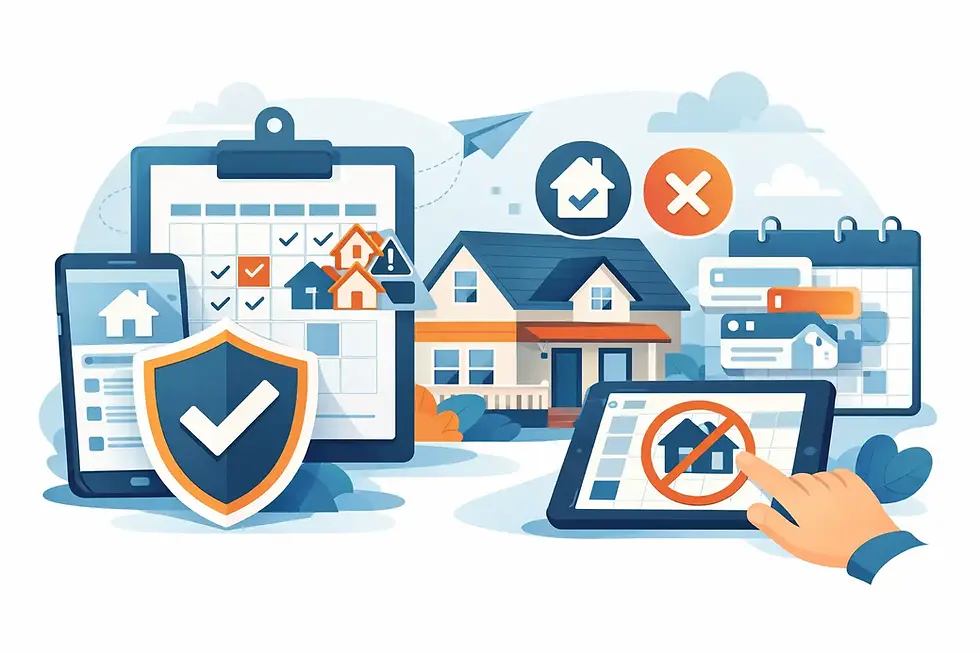
For most hosts, automation falls into five practical buckets: guest messaging, calendar and channel management, dynamic pricing, cleaning coordination, and review or task follow-up. There are also tools for smart locks, guidebooks, noise monitoring, ID verification, and accounting, but those work best when your core operating system is already stable.
That is the real distinction many hosts miss. Automation is not about adding more tech. It is about making fewer mistakes at scale.
The core categories of short term rental automation tools
The first category is your property management system, or PMS. This is the command center. It usually handles reservations, guest messaging, task workflows, and calendar syncing across platforms. If you list on Airbnb and Vrbo, this matters immediately. Without a PMS or channel manager, double bookings and missed details become much more likely.
The second category is pricing software. Static pricing leaves money on the table in high-demand periods and can keep you overpriced during slower windows. Dynamic pricing tools adjust rates based on market conditions, seasonality, occupancy, booking pace, and local demand patterns. For hosts serious about revenue, this is often where automation produces the clearest return.
The third category is turnover management. Cleanings are one of the most common failure points in short-term rentals. Automation here can assign tasks, notify cleaners, confirm job completion, and flag issues before the next guest arrives. A beautiful listing will not save you from an operational miss on check-in day.
The fourth category is guest communication. Scheduled messages, quick replies, pre-arrival instructions, upsell offers, checkout reminders, and review prompts all belong here. The goal is not to sound robotic. The goal is to make sure key communication happens every time.
The fifth category is connected hardware and monitoring. Smart locks, thermostats, noise sensors, and security devices can reduce labor and improve control. But they only add value when they fit your workflow. A smart lock without a reliable check-in process is just expensive clutter.
The best tool stack depends on your stage
A new host with one unit does not need the same automation stack as an operator with eight listings.
If you are just getting started, the biggest mistake is overspending on software before you know your business model. You need a simple reservation flow, reliable messaging, a clean turnover checklist, and a pricing approach that is smarter than guessing. At this stage, ease of use matters more than advanced customization.
If you are managing multiple listings, your needs change. Now the risk is inconsistency. Different cleaners, multiple calendars, owner reporting, and guest communication across several properties create more moving parts. This is where a true PMS, stronger automations, and tighter task management start paying off.
If you are scaling into a small portfolio, reporting matters more. You need tools that help you spot weak performance quickly, standardize SOPs, and train team members without rebuilding the wheel every time. Automation becomes less about saving an hour a day and more about protecting margin.
Popular tools and where they fit
Hostfully, Hospitable, Guesty, OwnerRez, and Lodgify are often used as PMS or channel management solutions. Some are more beginner-friendly, while others are better for larger operations with more complexity. The best choice depends on how many listings you have, which channels you use, and whether you need stronger owner reporting, website features, or team workflows.
For pricing, tools like PriceLabs, Wheelhouse, and Beyond are common options. They can all improve pricing compared to a static calendar, but they are not plug-and-play magic. You still need a strategy. If your minimum stays, lead times, season settings, and comp set logic are off, the tool can automate weak decisions faster.
For cleaning and turnover workflows, some hosts rely on PMS-integrated task systems, while others use separate operational apps. Integration matters here. If your cleaner has to check three different apps to know what is happening, your process is already too complicated.
For guest communication, many hosts use built-in PMS automations for message sequences. That is often enough. You do not need five different messaging tools. You need clear templates, the right triggers, and a brand voice that feels helpful without feeling scripted.
Where hosts waste money on automation
The most common waste is duplicate functionality. Hosts buy a PMS, then add another messaging tool, another calendar tool, another task app, and another pricing layer without checking overlap. The result is higher cost, more logins, and more room for errors.
The second waste is automating a broken process. If your check-in instructions are confusing, scheduling them automatically does not fix the problem. If your cleaning checklist is vague, sending it faster does not improve the turnover. Software amplifies process quality. It does not create it.
The third waste is choosing based on features instead of operational fit. A platform may look impressive in a demo but still be wrong for your portfolio. A solo host with two cabins does not need enterprise-level complexity. A portfolio operator should not build around a tool that cannot support scale.
How to choose short term rental automation tools without creating chaos
Start with your bottleneck, not the marketplace. Ask what is costing you the most time, revenue, or guest satisfaction right now.
If you are missing booking opportunities, pricing and listing optimization may matter first. If you are constantly answering the same guest questions, messaging automation should move up the list. If your stress spikes every turnover day, task management and cleaner coordination need immediate attention.
Then look at integration. Your tools should talk to each other as much as possible. The fewer manual handoffs you have, the lower your error rate. This is especially important with reservations, pricing, and cleanings. Every disconnected process creates another point of failure.
Also consider how much control you want. Some hosts want heavy customization. Others want fast setup and simple workflows. Neither is wrong. But buying a highly flexible tool that you never fully configure can be just as limiting as using a basic tool that you outgrow too fast.
A good test is this: if a team member or VA joined tomorrow, could they learn your system in a day? If not, your automation stack may be too fragmented.
Automation should protect the guest experience, not flatten it
Hosts sometimes worry that automation makes hospitality feel cold. That only happens when the system is lazy.
Well-built automation actually creates a better guest experience because it removes inconsistency. Guests get arrival details on time. House rules are communicated clearly. Issues are routed faster. Review requests are sent at the right moment. You can even personalize messages with guest names, stay details, and property-specific notes without typing each one manually.
What should stay human? Exception handling, service recovery, and high-stakes conversations. If a guest has a complaint, a last-minute issue, or a special request, that is not the time to hide behind canned replies. The best operators automate the predictable and stay hands-on where judgment matters.
Build the system before you scale it
The hosts who win with automation are not always the most technical. They are the ones with the clearest operating model.
That means documented workflows, message templates that reflect how you actually host, pricing rules tied to real market logic, and turnover standards your team can follow without guessing. Once that foundation exists, software becomes a multiplier instead of a patch.
If you want a faster path, Rare Rentals offers a Zero to Super-Host STR Toolkit built for hosts who want proven systems, templates, and operating assets without spending months piecing them together. That kind of support matters when the goal is not just to automate tasks, but to build a rental business that performs under pressure.
The smartest move is not buying the most software. It is choosing the few tools that remove friction, protect revenue, and make your operation easier to repeat. When your systems are tight, growth stops feeling chaotic and starts feeling controlled.


Comments