
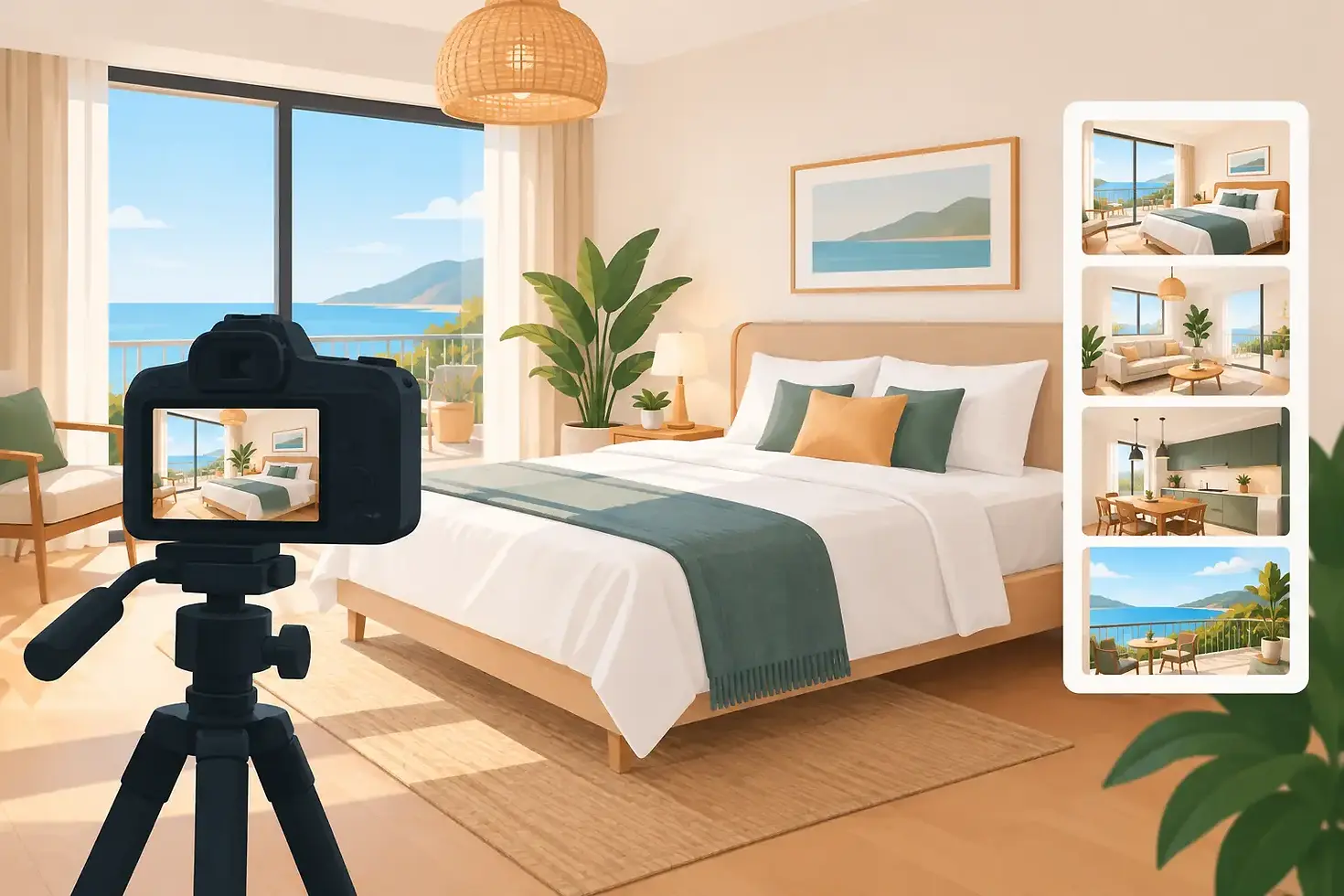
Airbnb Photography That Wins More Bookings

A guest can reject your property before they read a single word of your description. They see the cover photo, make a split-second assumption about quality, and keep scrolling if the listing feels dark, cramped, generic, or poorly maintained. Strong Airbnb photography is not a cosmetic upgrade. It is a revenue lever that affects clicks, conversion, review expectations, and the rate your market will support.
For hosts, the goal is not to create magazine art for its own sake. The goal is to make the right guest immediately understand what staying in your property will feel like. That takes a deliberate shot plan, honest styling, and photos that support the price you want to charge.
Why Airbnb Photography Changes Your Revenue Equation
Your listing photos do three operational jobs. First, they earn the click in a crowded search grid. Second, they reduce uncertainty once a guest opens the listing. Third, they set expectations that can protect your review score after checkout.
A bright, well-composed image of a private hot tub, skyline view, work desk, or bunk room can make a guest stop scrolling. But the full gallery does the heavier work: it answers practical questions about sleeping arrangements, kitchen functionality, parking, bathrooms, outdoor space, and overall condition. When guests can picture their stay, they are more likely to book.
Photography also affects your pricing power. If your home looks polished, intentional, and well equipped, guests are more willing to accept a higher nightly rate than they would for a comparable property presented with dim phone photos. The property itself still has to deliver. Great images cannot repair a weak location, worn furniture, or missing basics. They can, however, stop you from leaving money on the table because your listing looks cheaper than it is.
The trade-off is expectation management. Over-edited photos, ultra-wide lenses that distort room size, or images that hide limitations may earn bookings initially, but they often create disappointed arrivals and lower ratings. Professional hosts sell the real experience at its best, not an imaginary version of it.
Build the Property Before the Photographer Arrives
The most expensive mistake is booking a photographer before the home is photo-ready. A skilled photographer can improve lighting and composition. They cannot make clutter, bad bedding, empty walls, weak amenities, or unfinished maintenance disappear without turning the gallery into a misleading sales pitch.
Start with a guest-eye walkthrough. Stand at the entry, sit on the sofa, lie on each bed, and check every room from the perspective of someone deciding whether the space feels clean, useful, and comfortable. Remove personal items, excess décor, visible cords, cleaning supplies, pet bowls, damaged linens, and refrigerator magnets. Clear kitchen counters, but do not strip them so bare that the home feels sterile.
Then fix what the camera will expose. Replace mismatched bulbs, burned-out exterior lights, stained towels, sagging pillows, tired shower curtains, and anything visibly broken. Pull curtains evenly, straighten rugs, fluff cushions, and make every bed with hotel-level precision. These details read as care, which is exactly what guests want when they are trusting you with a trip.
Styling should support your target guest, not your personal taste. A family-friendly cabin benefits from a neatly staged game shelf, a firepit setup, and a clear image of the bunk room. A business-travel condo should show a real workspace, strong Wi-Fi setup, and easy parking or building access. A luxury couples retreat should lead with privacy, ambience, and the feature that makes it feel special.
The Airbnb Photography Shot List That Converts
A complete gallery should guide guests through the property in a natural sequence. It should not feel like 25 versions of the same living room. Plan for enough range that the guest can answer key questions without sending a message, while keeping the best images early in the gallery.
Your photographer should capture these core categories:
A compelling hero image that sells the property’s strongest feature
Exterior and arrival photos, including parking or entry when useful
Wide, clean images of every bedroom, bathroom, kitchen, living area, and outdoor space
Detail shots that show quality, such as a coffee station, premium linens, fireplace, soaking tub, or stocked game area
Amenity photos that prove booking value, including pools, hot tubs, views, grills, desks, laundry, and family gear
Context photos only when they help guests understand access, views, or a meaningful nearby draw
The hero image deserves special attention because it carries the most commercial weight. In many markets, the best cover photo is not the front exterior. It may be the pool at dusk, a mountain view from the deck, a bright living room with dramatic windows, or a beautifully staged bedroom. Test the image against a simple question: if a guest saw only this photo next to five competitors, would they want to learn more?
Bedrooms and bathrooms need clear, honest coverage. Guests care intensely about where they will sleep and whether the number of bathrooms works for their group. Photograph every bedroom from an angle that shows bed size and room layout. For bathrooms, show condition, fixtures, and shower or tub configuration. If a bathroom is small, do not disguise it. Use a flattering but truthful angle and compensate by clearly presenting the rest of the home’s strengths.
Hire a Pro or Shoot It Yourself?
For most revenue-focused properties, professional photography is a smart launch investment. A photographer experienced in vacation rentals understands exposure blending, room composition, window views, and the specific images travelers need to see. The resulting gallery can pay for itself through better conversion and rate confidence, especially for a new listing trying to establish traction.
That said, hiring a pro is not automatic. If you are operating on a tight startup budget, have a modest property, and can shoot in bright natural light with a capable phone, DIY photography can be enough to get live. The standard is not whether the images were shot on a phone. The standard is whether they look clean, straight, bright, accurate, and competitive against nearby listings.
If you shoot yourself, avoid flash-heavy photos, tilted vertical lines, dark corners, and mixed lighting that makes walls look orange or blue. Shoot during the brightest part of the day, turn on the lights that add warmth without causing harsh glare, and keep the camera level. Use a tripod if possible. Take more images than you need, then select only the strongest version of each room.
Drone photos can be valuable for acreage, waterfront homes, large pools, or locations where setting is a major advantage. They are less useful for a suburban condo where the aerial view mainly highlights neighboring roofs. Spend on the images that clarify value, not photography trends that do not help a guest decide.
Sequence Photos Like a Sales Conversation
Do not upload photos in the order they were taken. Your first five to eight images should make the listing’s core promise obvious. Lead with the hero, then show the next-best spaces and amenities. A guest should quickly understand the home’s style, capacity, and reason to choose it.
After that, organize the gallery logically: living spaces, kitchen and dining, bedrooms, bathrooms, work or family features, and outdoor areas. Captions should be concise and useful. Instead of “Beautiful kitchen,” write “Fully equipped kitchen with drip coffee maker, dishwasher, and seating for six.” The second caption reduces uncertainty and supports a higher-value perception.
Refresh photos whenever the guest experience materially improves. New patio furniture, a renovated bathroom, upgraded bedding, a hot tub, or a redesigned game room should not wait until next year’s slow season to appear in the listing. At the same time, remove photos of anything that no longer exists. Nothing creates preventable disappointment faster than a guest arriving to find an amenity shown online has changed.
Make Photos Part of Your Operating System
The best hosts treat photography as part of listing optimization, not a one-time launch task. Review your gallery alongside competitor listings in your market. Are you leading with your strongest differentiator? Are the rooms visibly brighter and more useful than comparable homes? Does the visual story justify your current rate and cleaning fee?
If occupancy is soft despite competitive pricing, your cover image and first ten photos are worth auditing before you assume demand is the problem. If guests repeatedly ask where they will park, whether a room has a door, or how many people fit at the dining table, your photos are not doing enough operational work.
Rare Rentals includes property-launch and listing optimization systems in its Zero to Super-Host STR Toolkit because small presentation mistakes compound quickly. The right gallery does more than make a listing look good. It gives guests confidence, reduces friction for your team, and positions your property to earn like a professionally run business.
Before your next photo shoot, do not ask whether the home looks nice. Ask whether every image makes it easier for the right guest to say yes.


Comments